Weather in Bangalore : 29°C as at 09:45
  • ~WISH YOU ALL A VERY HAPPY AND WONDERFUL MOMENT.~
Week's Proverb : A nod is as good as a wink.-(To a person who is ready to understand or undertake something, any subtle signalling of it is sufficient)

Theme of the Week

About Me

It is my first time to say hello and do some self introduction to everybody here online. My name is Ashis.P.Donthi, male, 27, from Bangalore, India. I like reading, and do some collections in my spare time.

About Me

It is my first time to say hello and do some self introduction to everybody here online. My name is Ashis.P.Donthi, male, 27, from Bangalore, India. I like reading, and do some collections in my spare time.

About Me

It is my first time to say hello and do some self introduction to everybody here online. My name is Ashis.P.Donthi, male, 27, from Bangalore, India. I like reading, and do some collections in my spare time.

About Me

It is my first time to say hello and do some self introduction to everybody here online. My name is Ashis.P.Donthi, male, 27, from Bangalore, India. I like reading, and do some collections in my spare time.

About Me

It is my first time to say hello and do some self introduction to everybody here online. My name is Ashis.P.Donthi, male, 27, from Bangalore, India. I like reading, and do some collections in my spare time.

Showing posts with label Awards. Show all posts

Tuesday, August 16, 2011

Noor Inayat Khan - Princess, Heroine, Spy


Sultan Fateh Ali Tipu, also known as the Tiger of Mysore, was the ruler of the Kingdom of Mysore in India. His full name was Sultan Fateh Ali Khan Shahab or Tipu Saheb Tipu Sultan. He was not just a ruler but also a scholar, a soldier, and a poet. He was a devout Muslim but the majority of his subjects were Hindus. At the request of the French, he built a church, the first in Mysore. The French also trained his army. He helped his father Haider Ali defeat the British in the Second Mysore War. However, he was defeated in the Third and the Fourth Anglo-Mysore Wars by the combined forces of the British East India Company and the Nizam of Hyderabad, another Muslim ruler. Tipu Sultan died fighting in the defense of his capital Srirangapattana, on 4 May 1799.

In Tipu Sultan's lineage, a child by the name of Inayat Khan was born in the year 1882 in a noble Indian family. Inayat Khan's mother was a descendent from the immediate family of Tipu Sultan. He was introduced to the Suhrawardiyya, Qadiriyya and Naqshbandi orders of Sufism but his primary initiation was into the Nizamiyya sub-branch of the Chishti Order. He was also indebted to the philosophical Vedanta/Shankara spirituality of Hinduism.

With his mentor's encouragement Inayat Khan, later to be known as Hazrat Inayat Khan, left India in 1910 to come to the West, travelling first as a touring musician and then as a teacher of Sufism, visiting three continents. Eventually he married Ora Ray Baker from Albuquerque, New Mexico. She was later known as Pirani Ameena Begum. Ora Baker was the half-sister of American yogi and scholar, Pierre Bernard, her guardian at the time she met Hazrat Inayat Khan.

Inayat Khan had four children with Pirani Ameena Begum-two sons and two daughters-with the eldest being Noor-un-Nisa. Noor-un-Nisa, later known as Noor-un-Nisa Inayat Khan, was born in the Kremlin in 1913 where her father was received as guest of the Czar Nicholas II. The Czar, his country troubled by internal unrest and looming war, was seeking spiritual solutions to the problems facing his regime. Therefore, the influential Gregory Rasputin invited Inayat Khan to visit Russia in order to share with the Emperor's family and court his Sufistic doctrines of peace and love.

In 1914, shortly before the outbreak of the First World War, the Khan family left Russia for London and lived in Bloomsbury, while Noor attended kindergarten at Notting Hill. In 1920, they settled in France, moving into a house in Suresnes near Paris, a gift from a supporter of the Sufi movement. After the death of her father in 1927, Noor had to take additional responsibility for her grief-stricken mother and her younger siblings. The young girl, variously described as calm, timid, astute, and pensive, studied child psychology at the Sorbonne and music at Paris conservatory under the famous Nadia Boulanger, composing for harp and piano. She started a career of writing poetry and children's stories and became a regular contributor to children's magazines and French radio. In 1939 her book, Twenty Jataka Tales, inspired by the Jātaka tales of Buddhist tradition, was published in London.
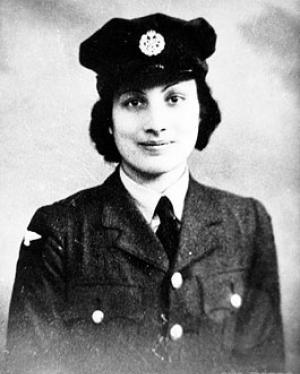
After the outbreak of World War II, when France was overrun by the Wehrmacht in 1940, the family fled from Paris to Bordeaux and from there by sea to London, landing in Falmouth, Cornwall in June 1940. Although Noor Inayat Khan was deeply influenced by the pacifist teachings of her father, she and her brother Vilayat Inayat Khan decided to help defeat Nazi tyranny. (Vilayat Inayat Khan later became head of the Sufi Order International.) So on November 19, 1940 she joined the Women's Auxiliary Air Force (WAAF), and as an Aircraftwoman 2nd Class, she was sent to be trained as a wireless operator. Later she was recruited to join F (France) Section of the Special Operations Executive (SOE) and in early February 1943 she was posted to the Air Ministry, Directorate of Air Intelligence. During her training she adopted the name Nora Baker.

Her fluency in French and her competency in wireless operation--coupled with a shortage of experienced agents--made her a desirable candidate for service in Nazi-occupied France. On the night between 16/17 June 1943, cryptonymed 'Madeleine' and under the cover identity of Jeanne-Marie Regnier, Noor Inayat Khan was dropped behind enemy lines in occupied France.

Together with two other women SOE agents, Noor joined the Physician network led by Francis Suttill, code named Prosper. Over the next month and a half, all the other Physician network radio operators were arrested by the Sicherheitsdienst (SD). In spite of the danger, Noor rejected an offer to return to Britain and continued transmitting as the last essential link between London and Paris. Moving from place to place, she managed to escape capture while maintaining wireless communications with London. Finally, Noor Inayat Khan was betrayed to the Germans allegedly by a French Air Force pilot who worked as a double agent for the Nazis.

On or around 13 October 1943 Inayat Khan was arrested and interrogated at the SD Headquarters in Paris. Though SOE trainers had expressed doubts about Inayat Khan's gentle and innocent character, on her arrest she fought like a tigress. Thereafter, the SD officers were afraid of her and she was treated as an extremely dangerous prisoner. Hans Kieffer, the former head of Gestapo in Paris, testified after the war that she didn't give the Gestapo a single piece of information despite continuous grilling.

On 25 November 1943, Inayat Khan escaped from the SD Headquarters, along with two other SOE Agents but was captured in the immediate vicinity. There was an air raid alert as they escaped across the roof and regulations required a count of prisoners at such times. Their escape was discovered before they could get away. Consequently, Inayat Khan was taken to Germany on 27 November 1943 "for safe custody" and imprisoned at Pforzheim in solitary confinement, without any contact with the outside world and in complete secrecy.

She was classified as "highly dangerous" and shackled in chains most of the time. As the prison director testified after the war, Noor Inayat Khan remained uncooperative and continued to refuse to give any information on her work or her fellow operatives. On 11 September 1944 Noor Inayat Khan and three other SOE agents from Karlsruhe prison, Yolande Beekman, Eliane Plewman and Madeleine Damerment, were moved to the Dachau Concentration Camp.

It was a crisp Munich morning on September 13, 1944 when the four shackled women were led to the execution grounds. All were made to kneel. Friedrich Wilhelm Ruppert, the SS trooper in charge of executions, gave the orders to shoot. By eyewitness account, one by one the troopers shot Madeleine Damerment, Eliane Plewman, and Yolande Beekman.

Come the turn of the fourth prisoner, Wilhelm stopped the executioners. He stepped forward and hit the fourth prisoner with his gun butt. When she fell to the ground, he kicked her till she was reduced to a bloody mess. She was raised to her knees forcibly. Wilhelm then shot her in the back of her head thus bringing to an abrupt end the short life of Princess, spy, heroine, martyr Noor-un-Nisa Inayat Khan, a great great granddaughter of Tipu Sultan, the last Muslim sovereign of South India. One died fighting British imperialism. The other died for Britain fighting Nazi imperialism. Her last word was "Liberté". She was 30 years old.


Noor Inayat Khan was posthumously awarded a British Mention in Dispatches and a French Croix de Guerre with Gold Star. Noor Inayat Khan was the third of three World War II FANY members to be awarded the George Cross, Britain's highest award for gallantry not on the battle field.


Saturday, February 19, 2011

A LEGEND

Kamal Haasan (Date of Birth: 7 November, 1954), a Padma Shri holder, is the most decorated actor in terms of awards in the history of Indian cinema. He holds the record for the most National Film Awards for an actor (four), three awards for Best Actor, and one for Best Child Artist.
Six of his movies have been sent as India's official entry to the Oscars- The only actor to achieve this feat in the sub-continent.
Kamal haasan has won a total of 172 awards which is more than any other actor in the world living or dead. He was named as "kalaignani" meaning - an idol of art, by M. Karunanidhi for his classical work towards Tamil cinema. In his film Dasavatharam, he is played 10 different roles, an act which is the second of its kind in the world, after the Tamil movie Dambachari (1936).
Kamal Haasan also holds a record nineteen Filmfare Awards, ranging across five languages.
After his latest award in 2000, he wrote to the organization requesting exemption from further awards.
In 2003, his films Hey Ram, Pushpak, Nayagan and Kuruthipunal were showcased under the "Director in Focus" category at the Rotterdam Film Festival.
In 2004, Virumaandi won the very first "Best Asian film" award at Puchon International Fantastic Film Festival (PiFan).
In 2005, Sathyabama Deemed University awarded Kamal Haasan an honorary doctorate. He received the Chevalier Sivaji Ganesan Award for Excellence in Indian Cinema at the 2006 ceremony of the inaugural Vijay Awards.
He received the Living Legend Award in 2007 from FICCI, which recognizes outstanding personalities from the entertainment arena and honors them with awards at their annual global convention, FRAMES.
In 2010, the United Progressive Alliance government organised a retrospective of Kamal Haasan's films. During that event, Union Information and Broadcasting Minister Ambika Soni said the actor fell under a special category, as his cinema broke barriers of language and region. The same year, the Government of Kerala honoured him for completing 50 years in Indian cinema during the inauguration of statewide Onam celebrations in Thiruvananthapuram. A light-and-sound show titled “Suvarna Kamalam” to mark Kamal’s 50 years in Indian cinema, conceived by director T. K. Rajiv Kumar, was the highlight of the evening.
Kamal Haasan is also a recipient of the Kalaimamani Award from the Government of Tamil Nadu in 1980. Other recognitions includes a string of Tamil Nadu State Film Awards, Nandi Awards, Screen Awards and Vijay Awards, including four separate awards for his performance in Dasavathaaram.
In 2009, Kamal Haasan was appointed as the chairman of FICCI Media and Entertainment Business Conclave, organised by the entertainment division of the Federation of Indian Chambers of Commerce and Industry (FICCI).
Below are the list of awards won by the actor,

Awards

National Film Awards
1960 — Best Child Artist for Kalathur Kannamma
1982 — Best Actor Award for Moondram Pirai
1987 — Best Actor Award for Nayagan
1996 — Best Actor Award for Indian

Tamil Nadu State Film Awards
1977 — Best Actor Award for 16 Vayathinile
1978 — Best Actor Award for Sigappu Rojakkal
1980 — Best Actor Award for Varumayin Niram Sigappu
1981 — Best Actor Award for Raja Paarvai
1987 — Best Actor Award for Nayakan
1989 — Best Actor Award for Apoorva Sagodharargal
1991 — Special Award for Guna
1992 — Best Actor Award for Devar Magan
1996 — Best Actor Award for Indian
2006 — Best Actor Award for Vettaiyaadu Vilaiyaadu
2008 — Best Actor Award for Dasavathaaram

Nandi Awards
1983 — Best Actor Award for Saagara Sangamam
1986 — Best Actor Award for Swathi Muthyam
1989 — Best Actor Award for Indrudu Chandrudu

Filmfare Awards
1986 — Best Actor Award for Saagar
1998 — Best Story Award for Virasat

Filmfare Awards South
Kannada
1988 — Best Actor Award for Pushpak

Malayalam
1974 — Best Actor Award for Kanyakumari
1978 — Best Actor Award for Yaetta

Tamil
1975 — Best Actor Award for Apoorva Raagangal
1976 — Best Actor Award for Oru Oodhappu Kan Simittugiradhu
1977 — Best Actor Award for 16 Vayadhinile
1978 — Best Actor Award for Sigappu Rojakal
1981 — Best Actor Award for Raja Paarvai
1982 — Best Actor Award for Moondram Pirai
1987 — Best Actor Award for Nayagan
1991 — Best Actor Award for Guna
1992 — Best Actor Award for Thevar Magan
1994 — Best Actor Award for Mahanadhi
1995 — Best Actor Award for Kuruthipunal
1996 — Best Actor Award for Indian
2000 — Best Actor Award for Hey Ram

Telugu
1981 — Best Actor Award for Aakali Rajyam
1983 — Best Actor Award for Sagara Sangamam
1986 — Best Actor Award for Swathi Muthyam


Cinema Express Awards South
Tamil
1982 — Best Actor Award for Moondram Pirai
1987 — Best Actor Award for Nayagan
1988 — Best Actor Award for Punnagai Mannan
1989 — Best Actor Award for Apoorva Sagodharargal
1990 — Best Actor Award for Michael Madhana Kamarajan
1991 — Best Actor Award for Guna
1992 — Best Actor Award for Thevar Magan
1994 — Best Actor Award for Mahanadhi
1996 — Best Actor Award for Indian
2000 — Best Actor Award for Hey Ram

Telugu
1983 — Best Actor Award for Sagara Sangamam
1986 — Best Actor Award for Swathi Muthyam
1989 — Best Actor Award for Indrudu Chandrudu

Kannada
1987 — Best Actor Award for Pushpak


Film Fans Association Award
Tamil
1975 — Best Actor Award for Apoorva Raagangal
1976 — Best Actor Award for Oru Oodhappu Kan Simittugiradhu
1977 — Best Actor Award for 16 Vayadhinile
1978 — Best Actor Award for Sigappu Rojakal
1980 — Best Actor Award for Varumayin Niram Sigappu
1981 — Best Actor Award for Raja Paarvai
1982 — Best Actor Award for Moondram Pirai
1984 — Best Actor Award for Oru Kaidhiyin Diary
1985 — Best Actor Award for Kaakki Sattai
1985 — Best Actor Award for Punnagai Mannan
1987 — Best Actor Award for Nayagan
1989 — Best Actor Award for Apoorva Sagodharargal
1990 — Best Actor Award for Michael Madhana Kamarajan
1991 — Best Actor Award for Guna
1992 — Best Actor Award for Thevar Magan
1994 — Best Actor Award for Mahanadhi
1995 — Best Actor Award for Kuruthipunal
1996 — Best Actor Award for Indian
2000 — Best Actor Award for Hey Ram
2001 — Best Actor Award for Aalavandhan
2003 — Best Actor Award for Anbe Sivam
2005 — Best Actor Award for Vasool Raja MBBS
2008 — Best Actor Award for Dasavatharam

Telugu
1978 — Best Actor Award for Maro Charitra
1981 — Best Actor Award for Aakali Rajyam
1983 — Best Actor Award for Sagara Sangamam
1986 — Best Actor Award for Swathi Muthyam
1989 — Best Actor Award for Indrudu Chandrudu
1995 — Best Actor Award for Subha Sankalpam

Kannada
1988 — Best Actor Award for Pushpak

Malayalam
1974 — Best Actor Award for Kanyakumari
1978 — Best Actor Award for Yaetta
1989 — Best Actor Award for Chanakyan


Asian Film Festival Awards
1983 – Best Asian Actor Award for Sagara Sangamam
1986 – Best Asian Actor Award for Swathi Muthyam


Puchon International Fantastic Film Festival
2004 — Best Film Award for Virumaandi


International Film Festivals
1976 — Avargal at Moscow International Film Festival
1980 — Varumayin Niram Sigappu at International Film Festival of Mauritius
1983 — Sagara Sangamam at International Film Festival of India
1986 — Swathi Muthyam at International Film Festival of India
1987 — Nayagan at International Film Festival of India
1987 — Nayagan at International Film Festival Rotterdam
1987 — Nayagan at Locarno International Film Festival
1987 — Nayagan at Moscow International Film Festival
1988 — Pushpak at Cannes International Film Festival
1988 — Pushpak at International Film Festival Rotterdam
1988 — Pushpak at International Film Festival of India
1988 — Pushpak at Locarno International Film Festival
1993 — Mahanadi at International Film Festival of India
1995 — Kuruthipunal at International Film Festival Rotterdam
1995 — Kuruthipunal at Locarno International Film Festival
2000 — Hey Ram at International Film Festival Rotterdam
2000 — Hey Ram at International Film Festival of India
2000 — Hey Ram at Locarno International Film Festival
2003 — Anbe Sivam at International Film Festival of India
2004 — Virumaandi at International Film Festival Rotterdam
2004 — Virumaandi at International Film Festival of Korea
2005 — Nayagan at International Film Festival of Toronda


Vijay Awards
2007 – Best Tamil Film Award 1990 - 2005 for Thevar Magan
2007 – Chevalier Sivaji Ganesan Award for Excellence in Indian Cinema
2008 – Best Villain Award for Dasavatharam
2008 – Best Comedian Award for Dasavatharam
2008 – Best Story-Screenplay Writer Award for Dasavatharam
2008 – Most Popular Hero of the Year Award for Dasavatharam


Asianet Film Awards
2009 — Special Honour Jury Award 50 years Contribution to Indian Cinema


Shantaram Awards
2003 — Best Actor Award for Anbe Sivam
2003 — Best Singer Award for Anbe Sivam
2003 — Best Story Writer Award for Anbe Sivam
2003 — Best Screen Play and Best Dialogue Writer Award for Anbe Sivam


Tamil Nadu Murpokku Ezhuthalar Sangam Award
2003 — Best Story Writer Award for Anbe Sivam


India Today Award
2005 – Most Talented Hero, 1991 - 2005


Lion's Club Awards
4 awards


Screen Awards
1997 — Best Story Writer Award for Virasat
2000 — Best Actor Award for Hey Ram


Murugalayam Devar Awards
4 awards


Lux Zee Cinema Award
1997 — Best Comedian Award for Chachi 420


SICA Award – South Indian Film Cinematographers' Association
2003 — Best Actor Award for Anbe Sivam


Sitara Cine Award
3 awards


LIMCA Records
Since 1985 — Actor with most Filmfare Awards - 19 times
Since 1989 — Unique Midget Role - 3ft 8in for Apoorva Sagodharargal


Producer awards
National Film Award
1992 – Best Regional Film Award for Thevar Magan

Tamil Nadu State Film Awards
1981 – Best Film Award for Raja Paarvai
1989 – Best Film Award for Apoorva Sagodharargal
1992 – Best Film Award for Thevar Magan

Filmfare Awards South
1981 – Best Film Award for Raja Paarvai
1989 – Best Film Award for Apoorva Sagodharargal
1992 – Best Film Award for Thevar Magan
1995 – Best Film Award for Kuruthipunal

Cinema Express Awards South
1989 – Best Film Award for Apoorva Sagodharargal
1992 – Best Film Award for Thevar Magan
1995 – Best Film Award for Kuruthipunal


Special honours
1980 — Kalaimamani
1990 — Padma Shri
2003 — ATMA National Award for Tobacco Awareness
2004 — He got the first Abraham Kovoor National Award for his Humanist Activities and Secular Life in 2004.
2005 — Honorary doctorate
2009 — FICCI Living Legend
2009 – CNN IBN Indian of the Year 2009 – Special Achievement Award

Friday, November 27, 2009

Bharat Ratna

Bharat Ratna
Complete list
1.Sarvepalli Radhakrishnan
1888–1975
1954
Second President, First Vice President, Philosopher.
Tamil Nadu

2.C. Rajagopalachari
1878–1972
1954
Last Governor-General, independence activist.
Tamil Nadu

3.C. V. Raman
1888–1970
1954
Nobel-prize winning Physicist
Tamil Nadu

4.Bhagwan Das
1869–1958
1955
Literature, independence activist
Uttar Pradesh

5.Mokshagundam Visvesvarayya
1861–1962
1955
Civil Engineer, Dam Architect, Diwan of Princely state of Mysore
Karnataka

6.Jawaharlal Nehru
1889–1964
1955
First Prime Minister, independence activist, Author.
Uttar Pradesh

7.Govind Ballabh Pant
1887–1961
1957
independence activist, Home Minister
Uttar Pradesh (now Uttarakhand)

8.Dhondo Keshav Karve
1858–1962
1958
Educationist, Social Reformer, Awarded in his birth centenary year.
Maharashtra

9.Bidhan Chandra Roy
1882–1962
1961
Physician, Politician, Former Chief Minister of West Bengal
West Bengal

10.Purushottam Das Tandon
1882–1962
1961
independence activist, Educationist
Uttar Pradesh

11.Rajendra Prasad
1884–1963
1962
First President, independence activist, Jurist
Bihar

12.Zakir Hussain
1897–1969
1963
Former President, Scholar.
Andhra Pradesh

13.Pandurang Vaman Kane
1880–1972
1963
Indologist and Sanskrit scholar
Maharashtra

14.Lal Bahadur Shastri
1904–1966
1966
Posthumous, Second Prime Minister, independence activist
Uttar Pradesh

15.Indira Gandhi
1917–1984
1971
Former Prime Minister
Uttar Pradesh

16.V. V. Giri
1894–1980
1975
Former President, Trade Unionist.
Orissa

17.K. Kamaraj
1903–1975
1976
Posthumous, independence activist, Chief Minister-Tamil Nadu.
Tamil Nadu

18.Mother Teresa
1910–1997
1980
Nobel Laureate (Peace, 1979).
West Bengal

19.Vinoba Bhave
1895–1982
1983
Posthumous, Social Reformer, independence activist.
Maharashtra

20.Khan Abdul Ghaffar Khan
1890–1988
1987
First non-citizen, independence activist.
Pakistan

21.M. G. Ramachandran
1917–1987
1988
Posthumous, Chief Minister-Tamil Nadu, Actor.
Tamil Nadu

22.B. R. Ambedkar
1891–1956
1990
Posthumous, Architect-Indian Constitution,Social Reformer, Economist and Scholar
Maharashtra

23.Nelson Mandela
b. 1918
1990
Second non-citizen and first non-Indian, Leader of Anti-Apartheid movement.
South Africa

24.Rajiv Gandhi
1944–1991
1991
Posthumous, Former Prime Minister
New Delhi

25.Sardar Vallabhbhai Patel
1875–1950
1991
Posthumous, independence activist, First Home Minister of India.
Gujarat

26.Morarji Desai
1896–1995
1991
Former Prime Minister, independence activist.
Gujarat

27.Abul Kalam Azad
1888–1958
1992
Posthumous, independence activist, First Education Minister of India
West Bengal

28.J. R. D. Tata
1904–1993
1992
Industrialist and philanthropist
Maharashtra

29.Satyajit Ray
1922–1992
1992
Film director
West Bengal

30.A. P. J. Abdul Kalam
b. 1931
1997
Former President, scientist.
Tamil Nadu

31.Gulzarilal Nanda
1898–1998
1997
independence activist, former Prime Minister.
Punjab

32.Aruna Asaf Ali
1908–1996
1997
Posthumous, independence activist.
West Bengal

33.M. S. Subbulakshmi
1916–2004
1998
Carnatic music vocalist.
Tamil Nadu

34.Chidambaram Subramaniam
1910–2000
1998
independence activist, Minister of Agriculture.
Tamil Nadu

35.Jayaprakash Narayan
1902–1979
1999
Posthumous, independence activist, Social Reformer.
Bihar

36.Ravi Shankar
b. 1920
1999
Sitar player
United States

37.Amartya Sen
b. 1933
1999
Nobel-prize winning Economist
West Bengal

38.Gopinath Bordoloi
1890–1950
1999
Posthumous, independence activist, Chief Minister
Assam

39.Lata Mangeshkar
b. 1929
2001
Singer
Maharashtra

40.Bismillah Khan
1916–2006
2001
Classical musician, shehnai maestro
Bihar

41.Bhimsen Joshi
b. 1922
2008
Hindustani Classical vocalist
Karnataka

Share

Twitter Delicious Facebook Digg Stumbleupon Favorites More

Free Domain
Audio Streamed by the BroadWave Streaming Audio Server by NCH Software